A little weight, spread evenly, gives the kind of deep pressure that many children find reassuring and settling. Everything here is made to the weight and size you need.
What we make
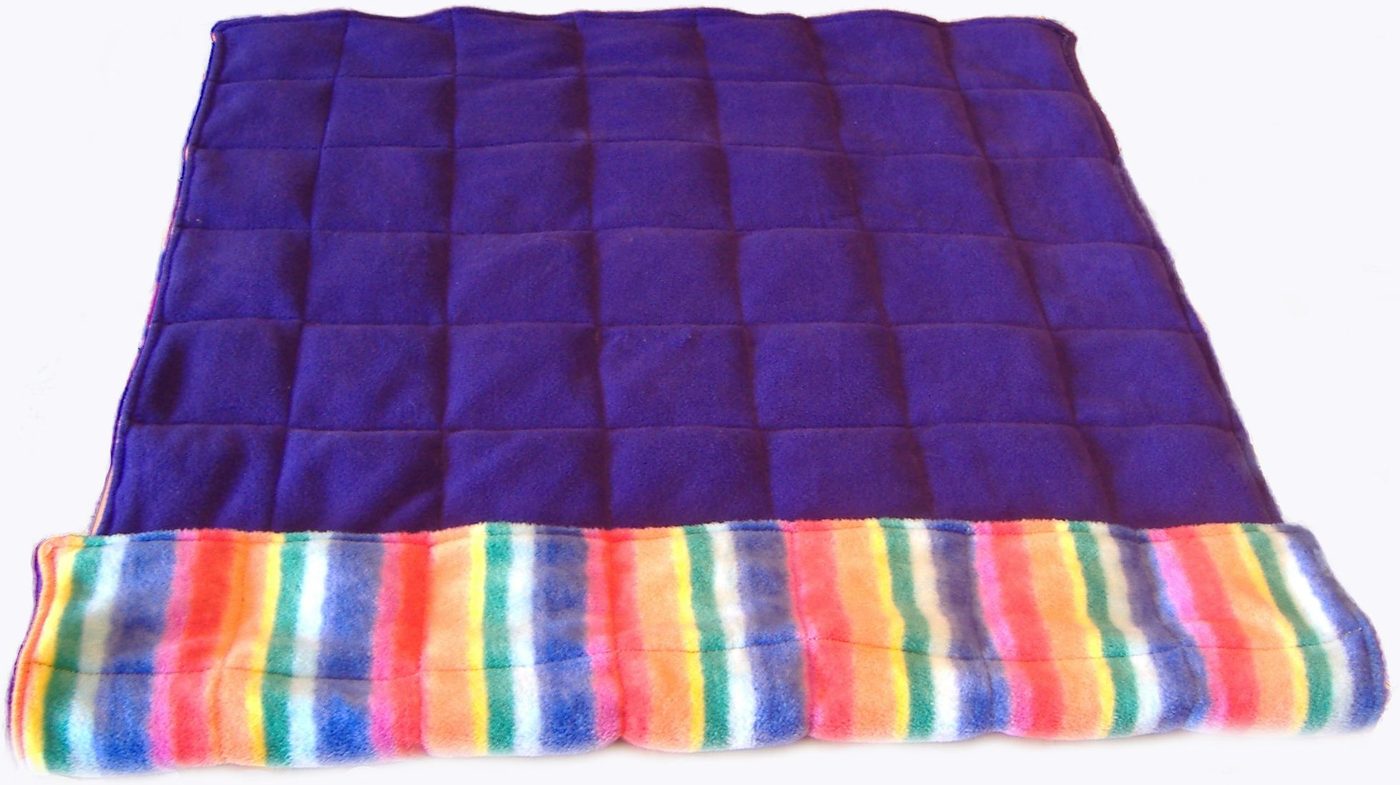
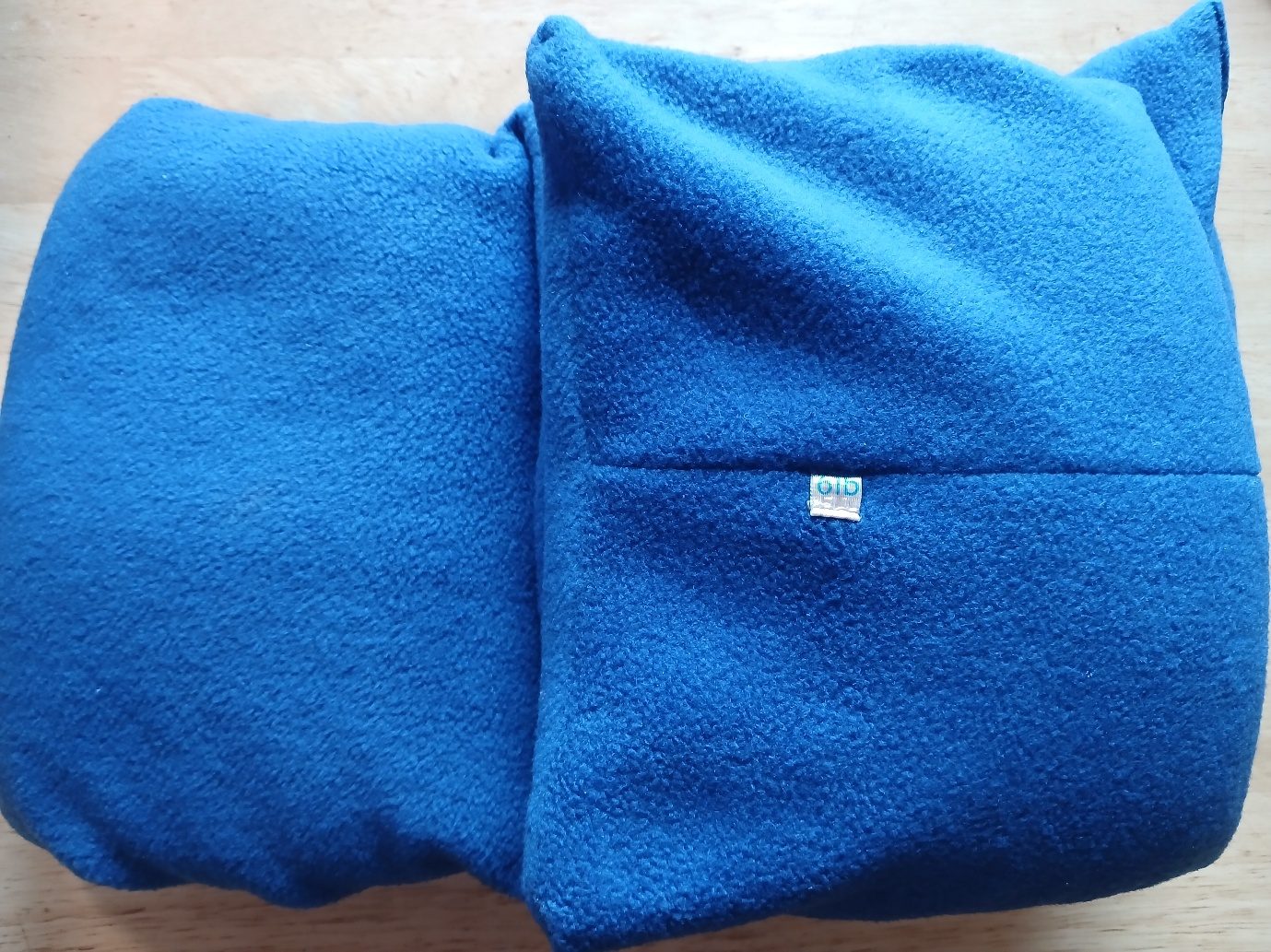
Weighted blankets
A deep-pressure hug that helps the body regulate itself, especially at transition times like bedtime. Three sizes — Medium 72 × 92 cm, Large 92 × 122 cm and X-Large 102 × 158 cm — made anywhere from 4 lb to 14 lb. Large suits children of about seven and under; X-Large suits older children.
€170 – €330
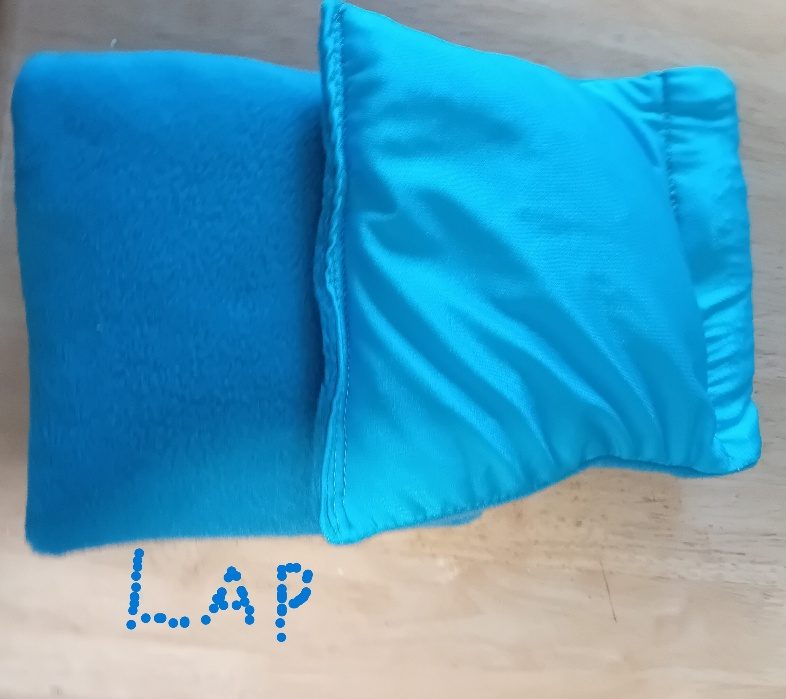
Weighted lap pads
A long, narrow pad that drapes over the shoulders or lies across the thighs — at a desk, at the table or in the car. Feels silky, loose and fluid. Made from 3 lb to 6 lb, roughly 90 cm long and 15–20 cm wide, in fleece or cooling lycra. Royal blue and rainbow check are usual; other colours on request.
€60 – €85
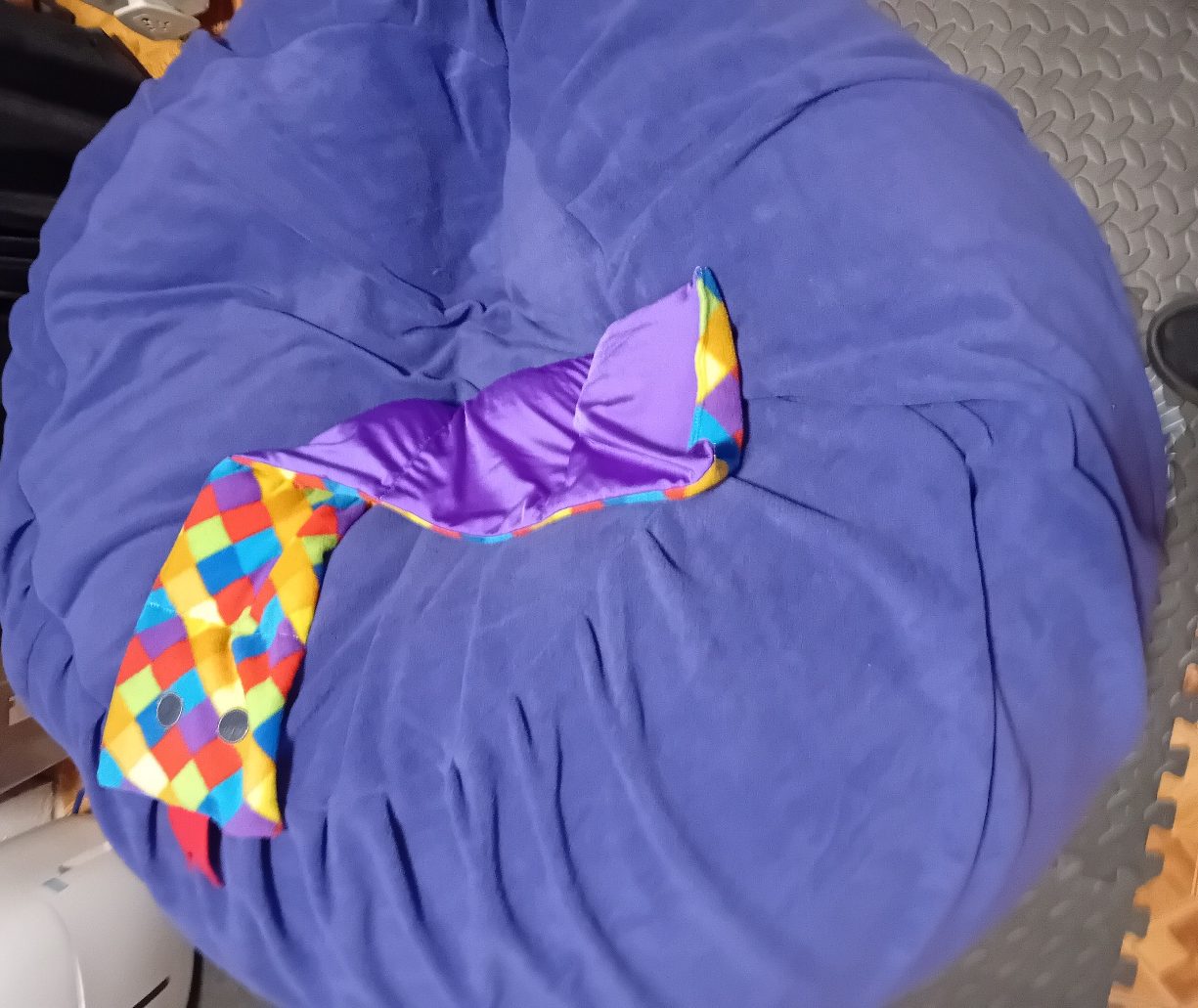
Weighted snakes
Segmented so it sits comfortably on the lap or around the shoulders; doubled over, it works as a lap pad. Visual and tactile as well as compressing. Short and wide — 7 × 34 in (4 lb), 7 × 36 in (5 lb), 7 × 38 in (6 lb) — or long and narrow at 5 × 47 in in the same three weights. Mid grey, royal blue or rainbow check; other colours on request.
€75 – €95
Choosing the right weight
This is the question we are asked most. Here is how we normally think about it.
Lap pads: around 5% of the child's body weight is the usual starting point.
Blankets: roughly 10% of the child's body weight, give or take a pound or two, taking health, age, muscle tone and deep-pressure needs into account.
A three-year-old is typically well suited to a 1.5 lb or 2 lb lap pad.
Blankets for young children: 2 lb or 2.5 lb, at roughly 97 × 92 cm.
Lighter is a fine place to start. A small amount of weight is often enough to be reassuring and to help with self-soothing.
Please check with your occupational therapist before ordering. They know the child, and weight, size and how long a product is used for should all be matched to them. A weighted product should never be used on a child who cannot move it off themselves, and should not be used unsupervised for sleep unless your OT has specifically advised it.
Ordering a weighted product
Weighted products are ordered through Julie rather than online, because each one is matched to the child. Tell her the child's age and weight and what the product is for, and she will suggest a weight and size, confirm the price, and then let you know how to pay. Nothing is made until you have agreed it together.
Two 4 lb lap pads: fleece behind, cooling lycra in front.
Washing and care
Because the weights are sewn into the blanket, a little care is needed when washing and drying.
Think twice before washing. Often all that is needed is a spot clean with a wet wipe, which works really well. Soaking overnight or hand washing is also fine.
To protect the blanket in the machine, put it inside a duvet cover. Wash at 40 °C or cooler with a small amount of natural or mild detergent.
Short spin.
Best dried flat or hung across a rack. Tumble drying on the lowest setting is fine — check it every 10 minutes, as fleece dries quickly.
Don't use fabric softener, iron, dry clean or microwave it.
The weight comes from small round polypropylene pellets: non-toxic, hypoallergenic and non-porous, so they stand up to washing and drying. They are spread evenly through sealed pockets, and the seams are reinforced.
Talk to Julie
Every beanbag is made to order, so there is always someone to ask before you buy. Questions about sizes, fabrics, weights or delivery are all welcome.